Wikimedia blog

News from the Wikimedia Foundation and about the Wikimedia movement

Fundraising

News about fundraising, including the annual Wikimedia Foundation fundraiser.

The faces behind the numbers: reviewing the 2012 Wikimedia Deutschland Fundraiser

Wikimedia Deutschland, the official Wikimedia Chapter in Germany, is the largest chapter fundraiser in the Wikimedia movement. This report of the 2012 fundraiser in Germany expands on the Wikimedia Foundation fundraiser report published this week on the Wikimedia Blog. The original blog post in German can be found here

In this video appeal a number of Wikipedia readers speak up. Pavel Richter, CEO of Wikimedia Deutschland, also explains why donations are important for spreading free knowledge.

In his thank you message to donors, readers, authors and staff, Pavel Richter gives a summary of the fundraising campaign and stresses what is important for Wikipedia and the future work of Wikimedia Deutschland.

The Numbers

Wikimedia Deutschland has experienced continued support from Wikipedia readers and the 2012 fundraising efforts again demonstrated how much people value the free encyclopedia. Even though this campaign was three days shorter than the previous year, we were able to increase the total result by 32 percent: 5,273,374 Euros were donated for Wikipedia and free knowledge during the last weeks via our fundraiser.

The online encyclopedia rests on many shoulders. It not only relies on the contributions of thousands of volunteer editors and supporters of free knowledge, but also on the 233,813 people who were inspired to donate. To look at this strong current of continuing support another way: We received a donation every 20 seconds over 49 days, between November 13 and December 31, 2012 (compared to 160,000 donors in the previous year). The average donation was 22,50 Euros. With many people giving to Wikipedia by means of small contributions, we’re not overly reliant on large donors and we can maintain our independence.

Wikimedia Deutschland is particularly happy about the many German Wikipedia readers who were willing to make recurring donations. Once again, we were able to increase the number of recurring donors by almost 50 percent compared to the previous year. During the fundraiser, more than 7,300 people opted for supporting Wikipedia on a regular basis.

Apart from asking for support in the form of donations, during this campaign we specifically asked Wikipedia readers to become members of Wikimedia Deutschland as well. Right after after they finished their payment, donors were able to fill out an online form in order to become a member. This simplified process was a sweeping success. We activated 2,376 new members, which means that, over the course of a few weeks, we almost doubled the number of Wikimedia Deutschland’s members.

The Campaign

Even though we were thoroughly prepared for the fundraiser, its start always marks the beginning of great activity for us. From the moment we switched on the fundraising banners on Wikipedia, we began to receive high volumes of e-mails and phone calls. That is why we now have some back up in our team. We know now that this was a wise decision. We were able to answer more than 100 e-mails during every day of the campaign (4,267 in total) and we answered all inquiries by the end of the campaign for the first time.

(more…)

Wikimedia Foundation releases detailed report on 2012 fundraiser

We are very happy with the success of the 2012 Wikipedia fundraiser, which has demonstrated the amazing support Wikipedia readers feel for the free encyclopedia. From July 2012 to April 2013, more than 2 million people donated approximately $35 million USD to the Wikimedia Foundation to support the online encyclopedia and its sister projects.

Donations help the Wikimedia Foundation maintain server infrastructure, support global projects to increase the number of contributors, improve the software that supports our projects, and make Wikipedia accessible globally to millions of people who are just beginning to access the Internet.

We divided the 2012 campaign into two parts. More than 1.2 million donors contributed to the 2012 year-end campaign, which ran on English Wikipedia in five countries (United States, Canada, Great Britain, Australia and New Zealand). The campaign was the shortest and most successful in Wikipedia’s history. It ran for only 9 full days, down from 46 days in 2011. The most successful 24-hour period for donations in 2012 brought in $2.4 million from 145,585 donors.

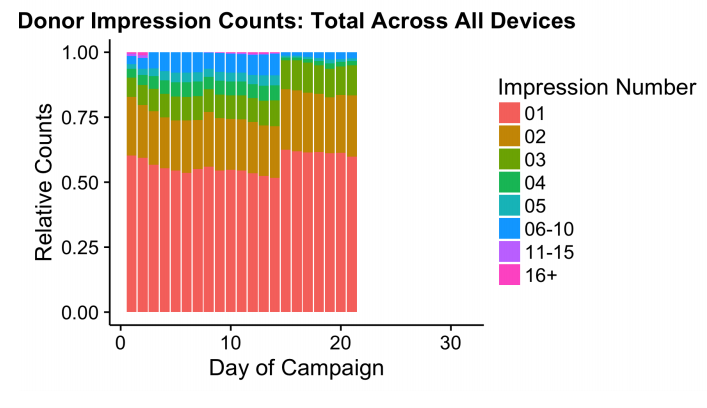
In early 2013, the fundraising team worked with volunteer translators to translate the best messages from the 2012 year-end campaign, and ran banners in the rest of the world outside of the five English-language countries. We also limited the number of times people saw the messages. Readers worldwide outside of the five English-language countries saw a maximum of five banner impressions in March 2013. During the multilingual 2013 campaign, we raised approximately $7 million USD from nearly half a million donors.

Volunteer contributors are the heart of the world’s largest encyclopedia and they make it the amazing resource it is. To highlight the tens of millions of hours they put into the projects each year, the Wikimedia Foundation ran a thank you campaign with a short video that showcased some of the roughly 80,000 volunteer editors, photographers and free-knowledge advocates from around the world who regularly contribute to Wikimedia projects. The thank you campaign also included an invitation to all Wikipedia readers to get started editing.

(more…)

Intro to the statistics of A/B testing with Wikimedia fundraising banners

The Wikimedia fundraising team relies on A/B testing to increase the efficiency of our fundraising banners. We raise millions of dollars to cover the expense of serving Wikipedia and the other Wikimedia sites. We don’t want to run fundraising banners all year round, we want to run them for as few days as possible. Testing has allowed us to dramatically cut the number of days of banners each year — from 50 to about nine.

We’re in the middle of reevaluating the statistics methods we use to interpret A/B tests. We want to make sure we’re answering this question correctly: When A beats B by x percent in, say, a one-hour test, how do we know that A will keep beating B by x percent if we run it longer? Or, less precisely, is A really the winner? And by how much?

If you’re not familiar with this kind of statistics, thinking about coin tossing can help: If you flip a coin one thousand times, you’re going to get heads about half the time. But what if you flip a coin only 4 times? Often you will get heads 2 times, but you’ll often get heads 1, 3 and 4 times. Four coin flips are not enough to know how often you’ll really get heads in the long run.

In our case, each banner view is like a coin toss: heads is a donation, tails is no donation. But it’s an incredibly lopsided coin. In some countries, and at certain times of day might only get “heads” one in one hundred thousand “flips.” Think about two banners with a difference: one has all bold type and one only has key phrases in bold. Those are like two coins with very slightly different degrees of lopsidedness. Imagine that, over the course of a particular test, one results in donations at a rate of 50 per hundred thousand, and another at a rate of 56 per hundred thousand.

Our question is: How can we be sure that the difference in response rates isn’t due to chance? If our sample is large enough (as when we flipped the coin one thousand times) then we can trust our answer. But how large is large enough?

We run various functions using a statistical programming language called R to answer all these questions. In future posts, if readers are interested, we’ll get into more details. But today, we just wanted to show a few graphs we’ve made to check our own assumptions and understanding.

The graph immediately below is from an exercise we just completed: We went back to one of our largest test samples, where we ran A vs B for a very long time. In fact, it is the example of “all bold” vs “some bold” I just mentioned, and the response rates across a range of low-donation-rate countries were 56 and 50 per 100,000 respectively. We chopped that long test up into 25 smaller samples that are closer to the size of our typical tests — in this case with about 3.5 million banner views per banner per test. Then we checked how often those short tests accurately represented the “true”(er) result of the full test.

In the graph below, you’re looking at the data showing how much A beat B by in each test (each subset of the larger test actually). The red vertical line represents the true(er) value of how much A beats B based on the entire large sample. Each dot represents A’s winning margin in a different test — 1.1 means A beat B by 10 percent. This kind of graph is called a histogram. The bars show how many results fit into different ranges. You can see that most of the tests fall around a central value. This is good to see! Our stats methods assume the data conforms to a certain pattern, which is called a “normal distribution.” And this is one indication that our data is normal.

Test data

Another piece of good news: all of the dots are greater than 1. That means that none of these smaller tests lied about banner A being the winner. What’s sad, though, is how much most of the tests lie about how much A should win by. This isn’t a surprise to us — we know that those ranges are wide — especially when response rates are as low as they were in this test.

One fun thing R can do is generate random data that conforms to certain patterns. The graphs below show what happened when we asked R to make up normally distributed data using the same banner response rates. Compare the fake data graphs below to the real data graph above. First of all, notice how much the three graphs vary below. That’s one simple way of showing that our real data doesn’t need to look exactly like any one particular set of R-generated normal data to be normal.

20130408_randTests2 20130408_randTests3 Randomly generated test data 1
Even so, can we trust that our data is normally distributed? We think so, but we have some questions. Our response rates vary dramatically over the course of a 24-hour day (high in the day, low at night). Does that create problems for applying these statistical techniques? In this particular test, the response rate varies wildly from country to country — and there are dozens of countries thrown into this one test. Does that also cause problems? Tentatively, we don’t think so because the thing we’re measuring in the end — the percentage by which A beats B — doesn’t vary wildly by country or time of day…we think. But even if it did, since A is always up against B in the exact same set of countries and times, we think it shouldn’t matter. One little (or maybe big?) sign of hope is that the range of our real data approximately matches the ranges of the randomly generated normal data.

But those are a few of the assumptions we’re working to check. We’re always reaching out to people who can help us with our stats. We’re looking for people who are Phd level math or stats people who have direct experience with A/B testing or some kind of similar response phenomenon. Email fundraising@wikimedia.org with “Stats” in the subject line if you think you might be able to help, or know someone.

Zack Exley, Chief Revenue Officer, Wikimedia Foundation and Sahar Massachi

Wikimedia Foundation raises $25 million in record time during 2012 fundraiser

The Wikimedia Foundation is happy to announce the successful completion of our ninth annual fundraising campaign in record time. Wikipedia readers donated $25 million and once again affirmed the value of the project by guaranteeing that the online encyclopedia will remain ad-free.

Donations help the Wikimedia Foundation maintain server infrastructure, support global projects to increase the number of editors, improve and simplify the software that supports our projects, and make Wikipedia accessible globally to billions of people who are just beginning to access the internet.

More than 1.2 million donors contributed to the campaign, which ran on English Wikipedia in 5 countries (United States, Canada, Great Britain, Australia and New Zealand) for only 9 full days, down from 46 days in 2011. The most-successful 24-hour period for donations this year brought in $2,365,564 from 145,573 donors. Messages and formats optimized in this year’s campaign will be used in another short fundraising drive for the rest of the world in April 2013.

“I’m grateful that the Wikipedia fundraiser was so successful. Our supporters are wonderful and without them we could not do the job of delivering free content worldwide,” said Sue Gardner, Executive Director of the Wikimedia Foundation. “We’re thrilled to be able to introduce our readers to the editors around the world who create Wikipedia and to invite our readers to join in editing.”

Volunteer contributors are the heart of the world’s largest encyclopedia. To highlight the tens of millions of hours they put into the projects each year, the Wikimedia Foundation has started a thank you campaign with short videos that showcase some of the roughly 80,000 volunteer editors, photographers and free-knowledge advocates from around the world who regularly contribute to Wikimedia projects. The campaign started today and will run through the end of the year.

You can meet the Wikimedians who we’re profiling in our thank you campaign here and continue to tune into the Wikimedia blog for further profiles of volunteer contributors.

Matthew Roth, Global Communications Manager

The Impact of Wikipedia: visual storytelling

(This video is part of a series produced for this year’s Wikimedia Foundation fundraiser. You can also view this video on Youtube.)

A montage video, Impact of Wikipedia, part of a series showcasing Wikimedians.

Every year for a handful of weeks in November and December, the Wikimedia Foundation has traditionally asked Wikipedia users to support the 5th largest website in the world with whatever donation they felt appropriate. The fundraising banners on the top of Wikipedia bring in the resources needed to keep the Wikimedia projects freely available to everyone in their own language and they guarantee that the sites will not have to rely on advertising.

Building on the effort last year to feature Wikipedia editors and contributors in fundraising appeals, the Foundation has produced a series of videos that dive deeper into what inspires these volunteers to improve the Wikimedia sites. These videos are replacing the fundraising banners today as part of a thank you campaign to everyone who has supported Wikipedia.

The interview footage for the videos was shot by a film crew at the 2012 Wikimania Conference this past July in Washington, D.C. Leading the crew was the Wikimedia Foundation’s Visual Storyteller, Victor Grigas, who is a filmmaker by training and has been a Wikipedia editor since 2005.

With the videos, Grigas said he hoped to show a personal side to Wikimedia and the process of why volunteers edit or donate their time. He found that the reasons editors cited for contributing ranged from wanting to share a love of baking, to an interest in white water kayaking, to a desire to create a more open society where information is available to everyone for free.

“Everybody is a nerd about something, and this is an outlet to express yourself in a way that deeply and profoundly influences other people,” Grigas said.

Finding Wikipedians amid the crowd of over 1000 attendees at Wikimania was an involved process. Grigas and his team reached out to editors through their userpages on Wikipedia and they set up a recruitment table in the conference cafeteria.

The team converted a number of hotel rooms near the conference site into mini studios, shooting each interview on two digital SLRs at different angles and focal lengths. They recorded with professional sound equipment, and to accentuate the interview subjects, they used light kits and shot against white paper backgrounds. In all, Grigas and his team conducted on-camera interviews with approximately 100 Wikipedians, capturing over 120 hours of footage.

“I started with a 20 minute cut that became a 6 minute cut and now the final version is just over 4 minutes,” explained Grigas of the video above. “One hundred plus hours of footage cut down to 4 minutes.”

In editing, Grigas chose to intersperse the wide-angle secondary camera footage with the primary camera so the audience could catch a glimpse of how they staged the sets. “I like the behind-the-scenes thing because Wikipedia is all about that,” explained Grigas. “Being behind the scenes allows anybody else to be able to see what equipment was used to make this, and then they can replicate it themselves too.”

In order to make the videos as widely accessible as possible and keep the focus on the editors’ stories, he elected to leave out music. “First of all, I’ll spend a lot of time trying to find music that fits the right mood. Then music has cultural baggage attached to it. I’m going to reach less people,” said Grigas. “I wanted people with a critical mind to be able to judge it and tear it apart and not feel like there’s music manipulating them.”

Grigas added, “Also I love remix culture and I thought I’d release something with a clean dialogue track that people could easily remix and sample. I’d love to hear a Bassnectar track or something that uses these sounds.”

The videos were fine-tuned using an array of software, including the open-source audio editor, Audacity. Grigas said the audio mixing process was streamlined thanks to the program and its ability to easily analyze and remove room tone from the soundtrack.

To help localize the videos, Grigas has provided English subtitles to his cuts and he’s hoping to get help from the large community of volunteer translators who work on Wikimedia projects. “Captions in multiple languages are something that we now have the ability to crowd-source with the new HTML5 video player. I’d love to see the community help to translate these short videos into their local languages,” he said.

Though the videos were part of the fundraiser and were originally meant to encourage contributions, Grigas is hopeful they also humanize the editing process. The videos, he said, do “a great job of explaining how Wikipedia functions and how it is generated, but he wants “people to learn something about the movement and about Wikipedia and then as time goes on, maybe they will donate potentially in the future.”

Interview and profile by Jawad Qadir, Communications Intern

The Impact of Wikipedia: Andrea Zanni

(This video is part of a series produced for this year’s Wikimedia Foundation fundraiser. You can also view this video on YouTube.)

Andrea Zanni discusses the power of serendipity

Andrea Zanni is a digital librarian at the University of Bologna, where he promotes and disseminates the institution’s 16 open-access journals, and provides access to digitized historic books by compiling metadata, uploading new scans, and running optical character recognition (OCR) software. He integrates the university’s free content into various WikiProjects and publishes documents to WikiSource. In addition to his contributions to the projects, Andrea is the project coordinator of Wikimedia Italia, the Italian chapter of the Wikimedia movement.

We recently ran an in-depth profile of Andrea that you can read in Italian and English here.

Matthew Roth, Global Communications Manager

The Impact of Wikipedia: Ravan Jaafar Altaie

(This video is part of a series for this year’s Wikimedia Foundation fundraiser. You can also view this video on YouTube.)

Ravan Jaafar Altaie and the impact she has had on the world through editing Wikipedia.

Like so many other Wikipedians, Ravan Jaafar Altaie was inspired to edit Wikipedia as a way to learn more about the world around her. As a native of Iraq, she also hoped to make a difference for Arabic speakers by expanding content on Arabic Wikipedia.

After frequenting the online encyclopedia as a reader for several years, Altaie was encouraged to try her hand at editing in 2008, when she heard about the “Add to humanity, add to Wikipedia” initiative started in Egypt. “That was the first time that I was aware that you can really edit Wikipedia instead of just consuming the information and using it for yourself,” said Altaie. “So once I heard about this, five minutes later I registered in Wikipedia and I started editing it.”

When describing one of her first editing experiences, Altaie was impressed by the collaborative spirit of the encyclopedia and by its immense reach. “I started many articles. One of them, I think it was about a lady, called Mariam Nour. So, and this was my first article. So I forget about it. Maybe two or three years later, I was having some time in Wikipedia, I passed by this article. I was shocked. It was grown!” she exclaimed. She said more than 100,000 people had read the article, which astonished her.

“You feel like you affected and influence more than 100,000 people. I think this is a very amazing thing.”

According to Altaie, editing an article allows a user to take time to research a specific topic or area of interest. She explained that by providing information to others by editing an article, an editor is discovering and learning new information at the same time. This perspective has motivated her to research and write about such diverse topics as the moons of Jupiter, the paintings of Leonardo da Vinci and the Arab Spring.

“There is always something new to write about,” explained Altaie. “If I want to know some information about some subject  — I don’t know anything about it — I start an article because I will search for the sources.”

Altaie finds motivation in the hope that knowledge can be spread in the Arab world through Wikipedia and she has attempted to help bridge the educational gap between the developed and developing world. “I think Wikipedia gave me this chance to really make a huge difference in the world,” she said. “I don’t know if you know this — information in the Arab world has been censored for many decades. So it’s really great to have free knowledge and free information given for people with reliable sources, with a great group of people reviewing this information.”

As more and more users turn to Arabic Wikipedia, editors like Altaie aim to increase the content, either by translating existing pages from other languages, or by creating original articles. The importance of such a source was illustrated by the widespread reliance on Wikipedia for reliable information during the Arab Spring when Altaie and her fellow Arabic-speaking Wikipedians provided day-to-day coverage of the events.

According to her, the significance of an online tool like Wikipedia is limitless. She said that by providing a means to make a change for the better, Wikipedia can serve as an investment in the future collective knowledge of the world.

“This is the best investment you are doing because you are affecting yourself, your children, the coming generation to have a free source, a free knowledge, an amazing encyclopedia, affecting all the fields of their life,” she said. “It’s like an investment for your future and for your children’s future.”

Profile by Jawad Qadir, Communications Intern
Interview by Victor Grigas, Visual Storyteller

The Impact of Wikipedia: Howard Morland

(This video is part of a series for this year’s Wikimedia Foundation fundraiser. You can support Wikipedia and free knowledge by contributing at donate.wikimedia.org. You can also view this video on YouTube.)

Howard Morland discusses the design of the first atomic weapon

The year was 1979, and Howard Morland had just uncovered a secret that would change the world’s understanding of atomic weaponry.

“I was on assignment for the Progressive Magazine when I discovered what is known as the H-Bomb Secret,” said Morland (User:HowardMorland). “It was the goal of the Progressive Magazine to take the veil away from this hidden part of the nuclear industry and let people know how the bomb is made, where it’s made, and where it’s deployed–everything about it.”

The U.S. government tried to issue an injunction to stop the Progressive Magazine from publishing the article, but after six months in court, the magazine prevailed. Morland’s article ran in its original form and, he argued, had an impact on the future use of nuclear weapons.

“It gave the anti-nuclear movement a lot of credibility in 1979. I think we played a role in the fact that, just a few years later, there was a worldwide outrage against nuclear weapons,” said Morland. “On June 12 of 1982, there were a million people marching in New York City to protest the bomb. We kind of brought the bomb into the anti-nuclear movement.”

More than twenty years later, Morland found himself engaged in the nuclear arms discussion once again–this time on Wikipedia.

Morland met a truck driver named John Coster-Mullen, who had self-published a book on the Hiroshima and Nagasaki bombs. “He had no expertise in science at all, but he had this weird idea that he would start going to reunions of the people who dropped the bomb, even though he wasn’t even their generation,” said Morland. “But he went there, he started making friends with these people, talking to them; they started telling him what they knew about the Hiroshima bomb and the Nagasaki bomb.”

In particular, Coster-Mullen’s book included an explanation of how the Hiroshima bomb worked, which contradicted the explanation in every encyclopedia in the world at the time. Morland, who has long had an interest in physics, looked at Coster-Mullen’s evidence and was convinced that his was the correct explanation.

“I told John, ‘The Wikipedia article is wrong–do you want to fix it?’ And he said, ‘I already tried.’” Coster-Mullen had submitted a correction to the Little Boy article, but another user told him it was not credible information because every other book in the world contradicted him.

“I said, ‘Well I think we can fix that.’ Even though I knew nothing about [Wikipedia]– this was my introduction–I said, ‘I think we can fix that.’” Morland recruited several others in this effort, including Richard Rhodes, who authored the Pulitzer Prize-winning book, The Making of the Atomic Bomb, and Stan Norris, who wrote the biography of Leslie Groves–the general who directed the Manhattan Project–and in his book had cited Coster-Mullen as a source.

Morland then posted on the talk page, saying, “We’ve read this guy’s book and we think he’s right and everybody else is wrong.” The other user who was initially concerned by the preponderance of contradictory literature relented and Morland made the change to the article.

This was back in March 2007, and Morland has been an active editor on Wikipedia since. “I figured, well, I’ll go fix all the nuclear weapon articles on Wikipedia,” he said. “Lately I do a lot of kayaking, [so] I thought, well, I’ll just do the kayaking articles.”

He finds it rewarding to contribute to Wikipedia because he feels it allows him to share his knowledge with a massive audience. “I know people who write books, especially in the nuclear weapons field. They are read by very few people,” he said, “but the Wikipedia article that I wrote on Nuclear weapon design gets 600 hits a day. Nobody’s book gets that much exposure. I don’t get any money for it, but I produce this information and somehow it’s getting out there and people are looking at it.”

Moreland’s estimates for the Nuclear weapon design article traffic were modest and combined, his contributions to the world’s understanding of the history of atomic energy is significant.

“Wikipedia is one of the most amazing institutions I’ve ever encountered. I don’t know anything like it,” said Morland. “It’s a testament to the desire of people to know things and to share information, despite the fact that from the beginning of time, when people started learning how to do stuff, I’m sure they tried to keep it secret. And I think that’s sort of part of human nature that we want to learn the truth and then share it with people.”

Profile by Elaine Mao, contributing writer
Interview by Dan McSwain 

The Impact of Wikipedia: Oarabile Mudongo

(This video is part of a series for this year’s Wikimedia Foundation fundraiser. You can support Wikipedia and free knowledge by contributing at donate.wikimedia.org. You can also view this video on YouTube.)

Oarabile Mudongo discusses the way Wikipedia has changed his life.

Growing up in Francistown, Botswana, Oarabile Mudongo was determined to reach his goal of attending university and being able to provide for himself and his family, as well as helping his community.  “I need to achieve more so that I can bring something home, help my parents, and also advise my friends and the community,” explained Mudongo. “ Looking at the fact that my parents got  nothing much to share with us or to provide to us, I really need to work hard.”

Mudongo developed a passion for computer engineering as a result of a computer lab endowment to his high school by a local mining company. “The main idea being that they wanted to boost the performance of students through fetching sources to read on the Internet,” he said.

The first time he used one of those computers, he was scared to touch it. “What if I destroy it?” he said. “Am I going to repay, and my parents don’t have the money to come and repay this? I was very cautious.” He has since become quite adept with computers. “I see myself being successful in life,” he said, “And that really drove my potential up until where I am right now.”

Mudongo was first exposed to Wikipedia while doing research for one of his projects as part of a local math and science fair project. “Most of the information that I got when I was in that group, the Math and Science Fair group, I relied much on Wikipedia,” he said. His projects later qualified to compete at the national level.

At that point he was hooked on computers and Wikipedia. Although he was told in school that he shouldn’t trust Wikipedia, he knew the awesome resource that it was for him and his classmates. When confronted with a Wikipedia-doubting teacher, he responded with the simple statement that “for one to understand what Wikipedia is, he or she needs to make a closer interaction with Wikipedia or Wikimedians. That’s when you understand that Wikipedia is indeed a solid rock.”

Mudongo first edited Wikipedia in 2011, just two years after coming in contact with his first computer. As part of the Setswana Wikipedia Challenge, he joined classmates in a friendly Wikipedia editing competition with the grand prize of a trip to Washington, D.C. to attend Wikimania 2012. The goal of the challenge was to translate English Wikipedia articles into Setswana and whoever got the highest marks based on the quality of the article and the richness of the language won the coveted prize. “I managed to win the challenge. I made it to D.C.,” which was a lifelong dream, he said.

Mudongo has only edited Wikipedia in Setswana, a language spoken by 4.5 million people in Southern Africa. He dreams of a day when a Wikipedia exists in his mother tongue Kalanga. “That is just my dream actually, to have a page where you can edit in Kalanga,” he said. As for topics, he mostly edits on tourism, articles related to Botswana and to his major, network engineering.

Mudongo credits Wikipedia with helping him succeed in school and in life, but with a drive like his, it’s hard to imagine him not succeeding in everything he does.

Profile by Alice Roberts, Communications Intern
Interview by Victor Grigas, Visual Storyteller

The Impact of Wikipedia: Mei Jiun Kwek

(This video is part of a series for this year’s Wikimedia Foundation fundraiser. You can support Wikipedia and free knowledge by contributing at donate.wikimedia.org. You can also view this video on YouTube.)

Mei Jiun Kwek discusses the importance of Wikimedia Commons for academic research.

Mei Jiun Kwek uploaded her first image to Wikimedia Commons while working as a scientific assistant at Crops for the Future (CFF), an international partnership organizations based in Malaysia. Since that fateful first picture, Kwek has contributed numerous images to Commons on behalf of CFF and sometimes her own work. “I contribute images on crop species, mainly on neglected and underutilized crops,” said Kwek.

Although her family doesn’t have an agricultural background, Kwek’s love of botany developed “during my bachelor and my master’s time, [when] I spent a lot of my time working in the forest to collect plant specimens,” she explained. Botany provides Kwek with a deeper understanding regarding the diversity of nature that surrounds her native Borneo. “I might think that these trees are all the same, they are green, they are trees, they don’t have a name, but actually they do.”

Kwek’s role at CFF is to document publications, “not only working with Wikipedia, Wikimedia Commons,” but also to assist with the dissemination of the organization’s scientific publications. CFF has over 250 completed and ongoing development projects aimed at enhancing productivity and consumption of underutilized and neglected food crops for better health and nutrition of local communities, Kwek said. Researchers like her recognize the need for their research to be freely accessible to everyone.

“We do not want the publications to be sitting on a shelf or only disseminate a few physical copies to our partners only. We want more readers to access the books,” explained Kwek.

Her user page gallery has now more than 50 images on neglected and underutilized crops and some of them are used in the related Wikipedia articles. “We found it better for us to put them in a public repository where everyone can see, everyone can use, and it is for educational purposes. That’s why we go to Wikimedia Commons.”

She explained that CFF no longer uploads images directly to the organization’s blog. “We link to Wikimedia Commons and we don’t upload photos to the website server, we make uploads to Wikimedia Commons, and then we use it on our website.”

She has also tried to convince researchers from similar organizations to do the same; however, she has been met with resistance. “They are just not excited to do that because they prefer to develop their own database, they prefer to upload the picture to their own organizations’ websites. They prefer to publish their knowledge in physical books, rather than contribute that idea to Wikipedia. Actually, I believe in the agriculture community or in the researcher community, they are not aware of the potential with working in Wikipedia,” she said.

Kwek argued it is the responsibility of agriculture researchers to translate their research into practice for the general public. “When you look into the crop article, you can find that you have basic information on the plant morphology characteristics, you know the name of the plants, you have information on the distribution, and on the taxonomic sites. But you don’t have information on the breeding of the plants. We have a lack of information on the culinary use, the nutritional use, and the post-harvest handling of all these plant species.”

According to Kwek, the vast potential of utilizing Wikipedia and its sister projects to improve the understanding and awareness of agricultural context, especially for neglected and underutilized crops, is still unrealized. “This is where the scientists or where the agriculture researchers can contribute their knowledge from that area,” she said.

Though she has already added significantly to free knowledge, Kwek said she is not finished. “There is still a lot of opportunity for me to do work in Wikimedia Commons. I can upload a lot more photos, images, and create more pages, more categories, especially on underutilized crop species.”

Profile by Alice Roberts, Communications Intern
Interview by Victor Grigas, Visual Storyteller